Jump to section
Quick take:
• A commercial roofer handles inspection, repair, and installation work on low-slope and flat roofing systems found on offices, retail buildings, and warehouses.
• Regular commercial roof inspections help property owners in Lakeland, FL catch leaks, membrane wear, and storm damage before they affect interior operations.
• Roofing contractors working on commercial structures follow federal fall-protection and safety standards that differ from residential roofing rules.
A commercial roofer is a licensed contractor trained to inspect, repair, and install roofing systems on business properties, including flat and low-slope membranes that differ structurally from residential shingles. Property managers typically bring in a commercial roofer when a building shows signs of ponding water, membrane cracking, or storm-related damage that threatens interior operations. Routine maintenance performed by a qualified contractor can extend a roof’s service life and reduce the likelihood of emergency repairs during Florida’s storm season.
Commercial roofing differs from residential work in material type, slope, and the scale of equipment involved. Flat and low-slope roofs common on warehouses, retail centers, and office buildings require different drainage planning and membrane systems than pitched residential roofs. Building owners in Lakeland, FL often deal with intense summer heat and seasonal storms, both of which accelerate wear on commercial roofing materials. Merritt Roofing and Construction Inc. Serving Lakeland FL can assess your building and recommend a system built for local conditions.
Core Responsibilities on a Commercial Property
A commercial roofer’s work generally falls into a few recurring categories tied to the building’s long-term condition.
• Inspections – checking membrane seams, flashing, drains, and rooftop equipment penetrations for early signs of wear.
• Repairs – addressing leaks, storm damage, and deteriorated flashing before they spread to the roof deck or interior structure.
• Installation – replacing aging roofing systems with materials suited to the building’s size, slope, and usage.
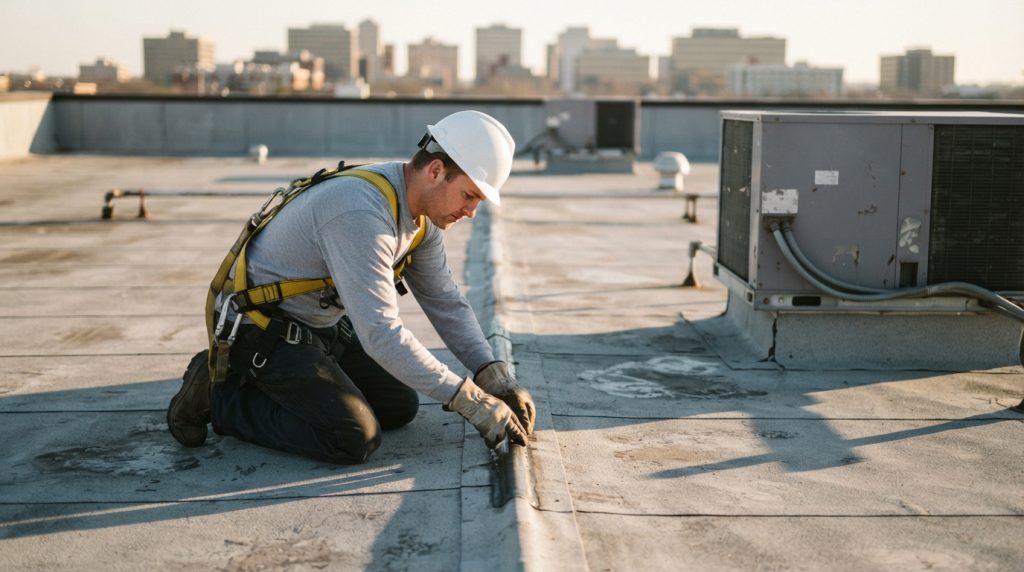
These tasks require different tools and access methods than residential jobs, since commercial roofs often cover larger areas and may support HVAC units or other rooftop equipment.
Safety Standards That Apply to Commercial Roof Work
Roofing contractors working on commercial buildings operate under federal workplace safety rules that specifically address fall hazards, since flat and low-slope roofs present unique risks like unprotected edges and roof hatches. Under OSHA’s fall protection standard, employees working on surfaces six feet or more above a lower level must be protected using guardrails, safety nets, or personal fall arrest systems. These requirements shape how a commercial roofing crew plans access, sets up equipment, and schedules work on a given property.
| Roof Type | Common Setting | Typical Fall Protection |
| Low-slope (4:12 or less) | Offices, retail, warehouses | Guardrails, safety nets, PFAS, or warning line with monitor |
| Steep-slope (greater than 4:12) | Some mixed-use or specialty buildings | Guardrails, safety nets, or PFAS only |
| Roofs with hatches or skylights | Any commercial structure | Guardrails around all exposed openings |
Understanding these distinctions helps property owners evaluate whether a contractor’s safety practices align with current federal guidelines before work begins.
Choosing a Contractor for Commercial Roof Maintenance
Selecting a roofer for a commercial property involves more than comparing price quotes. Building owners should confirm licensing, ask about experience with the specific roofing material installed on the structure, and request documentation of safety compliance. Based in Lake Alfred, FL, Merritt Roofing and Construction supports property owners across Lakeland, FL with roofing inspection, repair, and installation work.
Merritt Roofing and Construction lists commercial roofing among its services, alongside residential roofing, aluminum construction, and related exterior work. Property owners evaluating a contractor for a flat or low-slope roof typically look for documented experience with that roof type, since the inspection points and repair methods differ from pitched residential roofing.
Frequently Asked Questions
How often should a commercial roof be inspected? Inspection frequency depends on roof age, material, and exposure to severe weather, though many property managers schedule checks at least twice a year and after major storms.
What is the difference between a commercial and residential roofer? Commercial roofers typically work with flat or low-slope systems, larger surface areas, and rooftop equipment, while residential roofers usually focus on pitched shingle or tile roofs.
Can storm damage to a commercial roof be repaired without full replacement? Many storm-related issues, such as isolated membrane punctures or flashing damage, can be repaired without a full roof replacement if addressed promptly.
What safety rules apply to workers on a flat commercial roof? Federal fall protection rules require guardrails, safety nets, or personal fall arrest systems whenever work occurs six feet or more above a lower level.
Final Thoughts
Commercial roof maintenance depends on timely inspections, qualified repair work, and contractors who understand the safety requirements specific to flat and low-slope systems. Readers can View Merritt Roofing and Construction on Google Business Profile for published location and contact details.