Short version:
• A pre-auction inspection should cover fluids, hydraulics, tires, and serial numbers before any bid is placed.
• Most auction houses allow an open-house or preview period, which is the best time to examine equipment in person.
• Buyers who skip inspection risk hidden mechanical problems since items typically sell “as is, where is.”
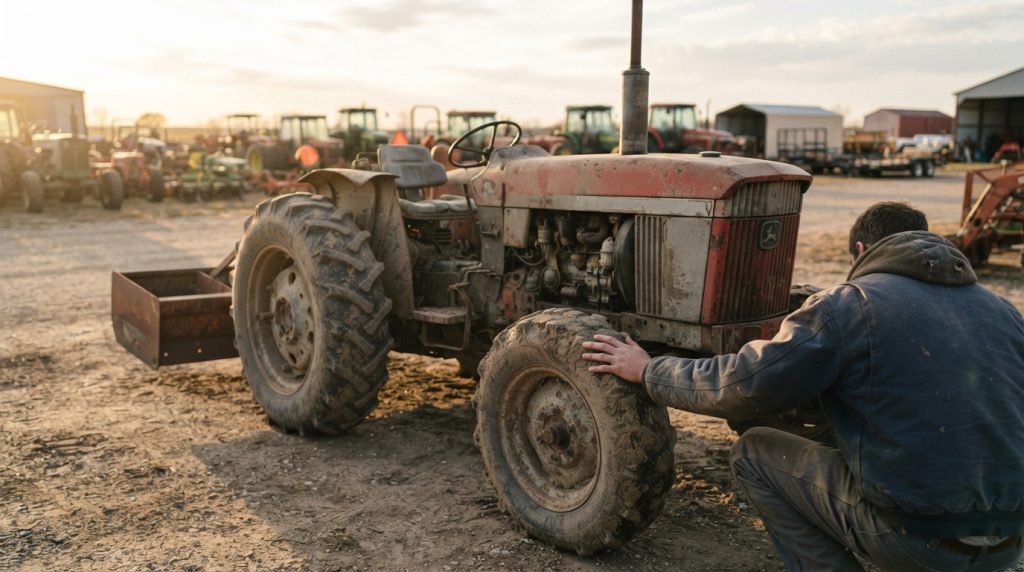
Inspecting used machinery before bidding means checking fluid levels, hydraulic function, tires, and documentation during a preview period so a buyer understands a lot’s true condition before money changes hands. Skipping this step at a farm equipment auction often leads to costly surprises after the gavel falls, since most lots sell without warranty.
A Farm Equipment Auction in Columbia City IN typically lists an open-house or preview window ahead of sale day, giving bidders a chance to walk the lots, start engines where permitted, and compare notes against catalog descriptions. Treating that preview period as mandatory homework, rather than an optional extra, is the single best habit a buyer can build.
Why Pre-Bid Inspection Matters
Auction listings rarely come with guarantees. Equipment is typically sold “as is, where is,” meaning the equipment is sold in its current condition, the seller or auction company may not guarantee future performance, and the buyer is responsible for inspecting the item before bidding. Photos alone are not reliable evidence of condition, since a tractor may look clean in photos, but photos do not always show hydraulic issues, transmission problems, emissions faults, tire damage, electrical codes, oil leaks, or hidden wear.
Reviewing catalog photos closely is still a useful first step. Buyers should look for clean, clear shots from multiple angles, close-ups of wear areas such as bearings and belts, and interior cabinet shots for complex systems. A listing with no usable photos is itself a warning sign worth following up on before the preview.
A Step-by-Step Inspection Checklist
A methodical walk-around prevents buyers from missing details under time pressure. The Occupational Safety and Health Administration notes that agricultural machinery carries ongoing mechanical and safety hazards, which is part of why a careful pre-use check matters even after a purchase is complete.
1. Confirm identity first. Verify the serial number and odometer on the unit, since the proper serial number lets a buyer confirm year, make, and model.
2. Check fluids and leaks. Look at whether oil is correct and clean or dirty and low, and whether there are leaks under the unit from oil, coolant, or hydraulic fluid.
3. Test hydraulics and transmission. Confirm the transmission shifts smoothly through gears without grinding, hydrostatic units respond without hesitation, hoses show no leaks or damage, and hydraulics lift smoothly and hold position.
4. Examine tires and structure. Watch for dents and peeling paint that suggest long outdoor storage, plus uneven tire tread measured against manufacturer standards.
5. Listen to the engine run. If allowed, check under the engine compartment and request the engine be started to look for leaks and listen for smooth running.
Documentation and On-Site Questions
Maintenance paperwork tells a story that a visual check cannot. Asking about service history is worthwhile because maintenance logs and repair records give a better understanding of equipment quality and repair frequency. A machine with documented upkeep carries less risk than one with no paper trail at all.
| Inspection Step | What To Check | Why It Matters |
| Identification | Serial number, hour meter | Confirms year, model, and true usage |
| Fluids & Leaks | Oil, coolant, hydraulic fluid | Flags neglect or pending repairs |
| Moving Systems | Hydraulics, transmission, PTO | Reveals costly mechanical failures |
| Paper Trail | Service logs, repair receipts | Shows ownership care over time |
For higher-value lots, bringing outside expertise can pay off. For a more complex or expensive piece, bringing a service tech or machinery expert along means their trained eye can spot issues a buyer might miss, possibly saving a costly mistake. A second set of eyes rarely hurts, especially on equipment with hydraulic or electronic systems that are harder to evaluate casually.
Frequently Asked Questions
Is it possible to inspect equipment before an online-only sale? Many online sales still schedule an in-person preview or open house at the equipment’s location before bidding closes, so checking the auction terms for a listed inspection date is worthwhile.
What if maintenance records are not available? Absence of records does not disqualify a lot, but it does raise the importance of a hands-on check of fluids, hydraulics, and visible wear before bidding.
Should a buyer request the engine be started during preview? Yes, when permitted. Listening for unusual noise and watching for smoke during a cold start can reveal issues that a static walk-around would miss.
Final Thoughts
Careful inspection turns an auction gamble into an informed purchase. Buyers who work through identification, fluids, hydraulics, tires, and paperwork before raising a paddle consistently avoid the costliest surprises that come with “as is” sales.
Auctioneers and property specialists who handle farm equipment, real estate, and estate sales across the region are listed through Metzger Auctions, a resource worth reviewing for upcoming preview dates and consignment details. Checking a sale’s open-house schedule ahead of time remains one of the simplest ways to prepare for confident bidding.
