Jump to section
Quick take:
• Most household septic tanks need pumping every three to five years, depending on tank size and household use.
• Warning signs include slow drains, gurgling pipes, and sewage odors near the tank or drainfield.
• Skipping scheduled pumping allows solids to reach the drainfield, which is a far costlier repair than routine service.
A septic tank holds and separates wastewater solids from liquids, and it needs to be emptied on a regular schedule to keep a home’s plumbing working correctly. Without that service, solids build up until they overflow into the drainfield or back up into household drains.
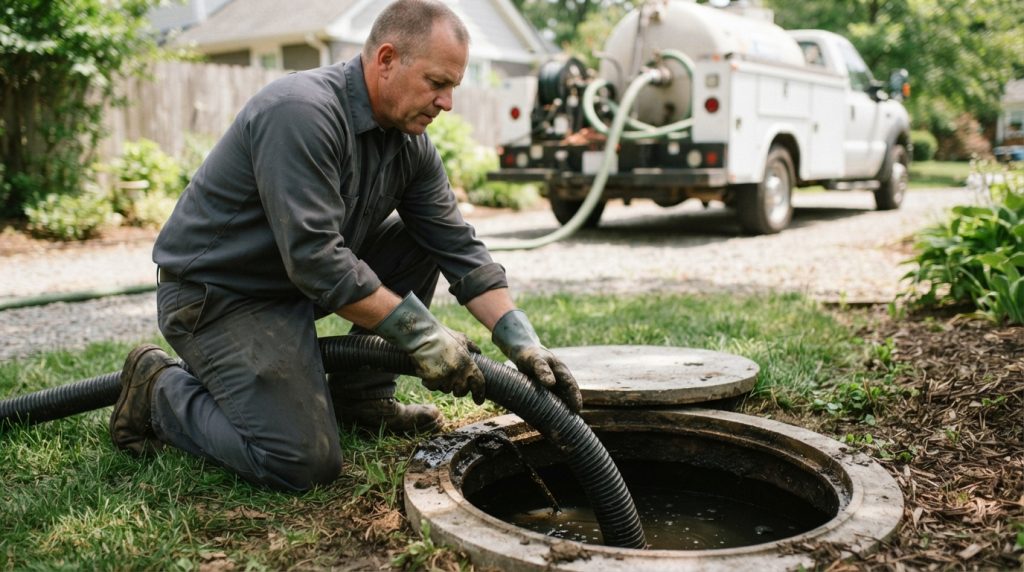
Routine Septic Tank Pumping removes accumulated sludge and scum from the tank before those layers reach the outlet baffle and damage the drainfield. According to the EPA’s guide on septic system care, household septic tanks are typically pumped every three to five years, with the exact interval depending on tank size, household size, and total wastewater generated.
Why Regular Pumping Matters
A septic tank is not a self-cleaning system. Solid waste settles at the bottom while grease and lighter material float to the top, and both layers grow over time.
• Sludge and scum that reach the tank’s outlet baffle begin moving into the drainfield.
• Clogged soil pores in the drainfield are far more expensive to fix than a scheduled pumping.
• A full tank can cause sewage to back up into household drains or surface in the yard.
The EPA recommends having a typical system inspected at least every three years by a professional, with pumping scheduled as the inspector advises.
Signs a Septic Tank Needs Attention
Homeowners in Dalton, TN with older housing stock or heavier clay soils may notice warning signs sooner than average, since slow-draining soil can make drainfield problems surface faster. Common indicators include:
1. Slow drains in multiple fixtures at once, rather than just one sink or toilet.
2. Gurgling sounds coming from pipes after water use.
3. Standing water, soggy ground, or sewage odor near the tank or drainfield.
4. Sewage backing up into tubs, toilets, or floor drains.
A backup affecting all fixtures at the same time usually points to a full tank, while a problem limited to one fixture or area often signals a separate line clog rather than a tank issue.
Pumping Frequency by Household Size
Tank capacity and the number of people in a household both affect how often pumping is needed. The table below reflects general guidance from septic industry sources rather than a fixed rule for every property.
| Household Size | Typical Tank Size | General Pumping Interval |
| 1-2 people | 1,000 gallons | Closer to 5 years |
| 3-4 people | 1,000-1,250 gallons | Every 3-4 years |
| 5-6 people | 1,500 gallons | Every 2-3 years |
| 7+ people | 2,000 gallons | Every 1-2 years |
Water usage habits, garbage disposal use, and whether a home has a washing machine on a heavy cycle schedule can all shift a tank toward the shorter end of its pumping interval.
Maintenance Habits That Extend Tank Life
Pumping on schedule is the core task, but a few daily habits reduce strain on the system between services.
• Space out laundry loads instead of running several in one day.
• Avoid flushing wipes, paper towels, or grease, since these do not break down and add to solids.
• Keep vehicles and heavy equipment off the tank and drainfield area.
• Keep a record of pumping dates, inspections, and any repairs for future reference.
Based in USA, Roto-Rooter serves customers across Dalton, TN, offering septic tank pumping among its service options.
Frequently Asked Questions
How do I know if my septic tank is full? Slow drains across multiple fixtures, gurgling pipes, and sewage odor or standing water near the tank are the most common signs a tank needs pumping.
Can additives replace the need for pumping? No. Septic tank additives do not eliminate the need for periodic pumping and may be harmful to the system over time.
What happens if a septic tank is never pumped? Sludge and scum eventually reach the outlet baffle and move into the drainfield, which can clog soil pores and require a far more expensive repair than routine pumping.
How often should a septic tank be inspected versus pumped? Inspections are generally recommended at least every three years, while pumping itself is typically needed every three to five years depending on tank size and household use.
Scheduling and Service Information
Business details and septic service information for Roto-Rooter are available for review by property owners comparing local service options.