Jump to section
In brief:
• Milk yield depends on balanced energy, protein, fiber, and mineral intake delivered consistently across lactation stages.
• Forage quality and transition-period nutrition are two of the biggest levers for dairy herd performance.
• North Country Feeds formulates rations suited to Manitoba’s climate and pasture-based systems.
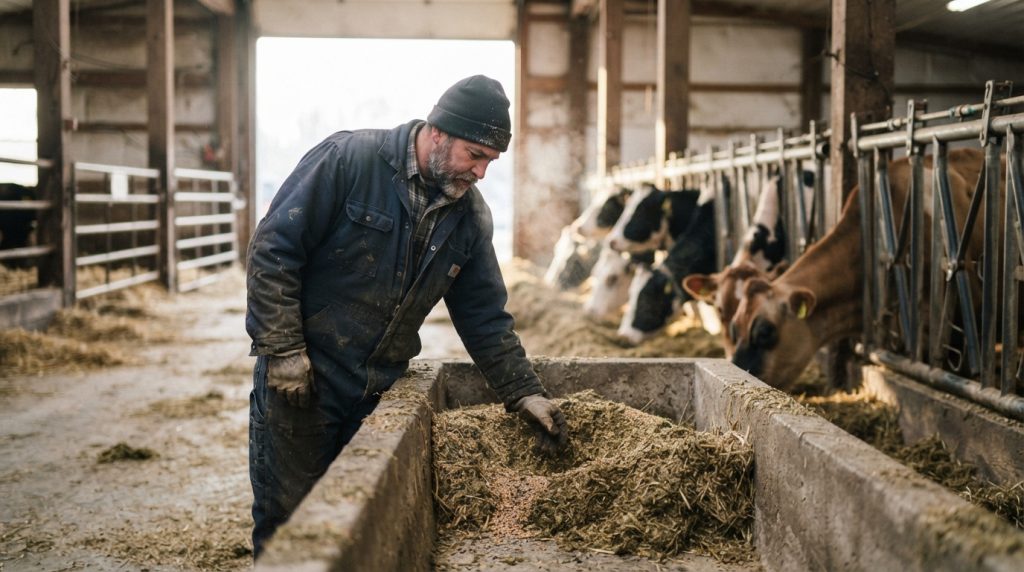
Milk production in dairy cattle responds directly to the balance of energy, protein, fiber, vitamins, and minerals in the daily ration. Cows that receive consistent, well-formulated nutrition throughout each lactation stage typically maintain steadier yields and better body condition than those on inconsistent feeding programs.
Selecting the right dairy cattle feed means matching ration composition to a cow’s stage of lactation, body condition, and the forage already available on the farm. Producers in Winkler, MB often work with rations that account for seasonal forage shifts, since pasture quality and stored feed value change from spring turnout through winter housing.
Core Nutrients Dairy Cows Need
A functional dairy ration balances several nutrient categories rather than maximizing any single one. Gaps in any category can suppress milk yield even when overall feed volume looks adequate.
• Energy from grains, byproduct feeds, or high-quality forage fuels milk synthesis and maintains body condition.
• Protein , including rumen-degradable and bypass protein, supports both microbial growth in the rumen and milk protein output.
• Fiber (NDF and ADF) from forage maintains rumen health and prevents acidosis.
• Minerals and vitamins , including calcium, phosphorus, and trace minerals, support bone health, immune function, and reproduction.
Manitoba’s provincial agriculture guidance notes that supplemental feeds like dried beet pulp are highly palatable, bulky, and have a mild laxative effect, and are commonly used in dairy diets. Guidance also cautions that such byproduct feeds should not exceed 20 to 25 percent of the concentrate mix for dairy or beef cattle, which illustrates why ration balance matters more than simply adding calories. Readers can review additional forage and byproduct feeding details through Manitoba agriculture’s livestock feed resources.
Matching Feed to Lactation Stage
Nutrient requirements shift substantially across a cow’s lactation cycle, and feeding the same ration year-round rarely produces optimal results.
1. Transition period (3 weeks pre- to post-calving): Lower-energy, higher-fiber rations reduce metabolic disorder risk before calving, followed by a gradual increase in energy density after calving.
2. Early lactation: Peak milk demand requires the highest energy and protein density of the cycle, often supported by concentrate feeds.
3. Mid lactation: Rations typically stabilize as intake catches up with output, allowing some reduction in concentrate density.
4. Late lactation and dry period: Energy needs taper, with emphasis shifting toward maintaining body condition for the next calving.
Forage Quality and Regional Considerations
Forage forms the foundation of any dairy ration, and its quality varies by harvest timing, storage method, and regional growing conditions. In Winkler, MB, seasonal swings between pasture-based grazing and winter stored feed mean producers often need rations that adjust for changing forage energy and protein content.
| Feeding Approach | Best Suited For | Key Consideration |
| Pasture-based grazing | Spring through fall | Forage quality varies with growth stage |
| Stored forage plus concentrate | Winter housing | Requires mineral and energy supplementation |
| Total mixed ration (TMR) | Confinement dairies | Consistent nutrient delivery year-round |
| Transition-specific ration | Pre- and post-calving | Lower energy, controlled mineral balance |
Feed formulated for Manitoba conditions generally accounts for winter feeding challenges and the energy demands of cold-weather maintenance, alongside pasture-stage nutrition planning.
Frequently Asked Questions
How does feed quality affect milk production directly? Energy and protein density in the ration influence how much milk a cow can synthesize, while fiber levels affect rumen function and overall feed efficiency.
Why does the transition period matter so much for dairy nutrition? The weeks around calving carry the highest risk of metabolic disorders, so controlled energy and mineral intake during this window supports a smoother start to lactation.
Should mineral supplementation change by season? Mineral needs can shift with forage source and reproductive stage, which is why many producers adjust supplementation between pasture and winter feeding periods.
Can byproduct feeds replace standard dairy concentrates? Byproducts such as beet pulp can supplement a ration but are generally limited to a defined share of the total concentrate mix rather than used as a full replacement.
Local Feed Resources
Based in Rhineland, MB, North Country Feeds serves customers across Winkler, MB with livestock feed formulated for regional farming conditions.
For published location and contact details, readers can Visit North Country Feeds.